Friday, May 19, 2017

Black-bellied Plover

The black-bellied plover, also known as the grey plover (Pluvialis squatarola) breeds in the Arctic regions, but winters in southern coastal areas. I spotted this black-bellied plover (from late April through August they have a black breast and belly; they molt to grey in fall and winter) a few days ago on the ocean beach.
 
This bird is the largest plover in North America, and its distinctive markings make for a striking sight on our beaches.


You can read more about the black-bellied plover here. 

This month's Ocracoke Newsletter is the entertaining story of Calvin Wilkerson and his Condomed Nautilus. You can read it here: https://www.villagecraftsmen.com/news042117.htm. 

Thursday, May 18, 2017

MST in a Day

Last week I wrote about the North Carolina Mountains to the Sea Trail (MST). This 1,175 mile trail extends from the mountains to the coast. Just over 14 miles of the trail are on Ocracoke Island.

Photo by Paul Travis


On Saturday, September 9, 2017, several hundred people will tackle the entire 1,175 miles of the trail by hiking various short legs. Legs average 3-5 miles, which means that just about anybody, of any age, can hike, & can find a suitable leg (dirt trail, road, greenway, beach, flat or steep.)

If you will be on the island Saturday, September 9, please consider hiking one of the three legs of the trail on Ocracoke Island (one is 4.5 miles long; one 3.2; and one 6.6).  Of course, many other segments of the trail are available to hike. To register to hike, and for more information, please visit the MTS web site.

This month's Ocracoke Newsletter is the entertaining story of Calvin Wilkerson and his Condomed Nautilus. You can read it here: https://www.villagecraftsmen.com/news042117.htm.  

Wednesday, May 17, 2017

Story

The US Navy established a sizable base on the island in 1942.

Some years ago I heard the following story.

When WWII ended, the base was decommissioned. Although the government hired a watchman to protect their abandoned property, it soon became apparent that there wasn't any effort to keep the buildings from quickly deteriorating, which distressed a people accustomed to reusing material and making do with what was available.

A few islanders discovered that the watchman had a craving for spirits. When he was sufficiently "under the weather" and asleep, those "lawless Outer Bankers" went to work with crow bars and hammers. One islander recalled it as the "midnight requisitions."

One particularly resourceful islander decided to remove an entire building!  He had purchased an Army surplus Power Wagon, and went to the base and loaded the small building onto a boat trailer. As he was hauling the building down what is now British Cemetery Road, the Power Wagon stalled and quit. He was unable to restart the vehicle, so he unhooked the trailer, leaving it and the building in the sandy lane. He and friends pushed the truck to his yard.


Of course, the next morning the watchman noticed the building gone, and soon located it in the lane. When confronted, the perpetrator claimed innocence, noting with insouciance, "Why there's no way it could have been me; that old truck over there, it won't even start!"

I never did hear what happened to the building. It is probably in someone's yard today, being used as a storage shed.

This month's Ocracoke Newsletter is the entertaining story of Calvin Wilkerson and his Condomed Nautilus. You can read it here: https://www.villagecraftsmen.com/news042117.htm.   

Tuesday, May 16, 2017

CSI, NSF, & PEACH

Two exciting collaborative projects studying offshore currents and the Gulf Stream have been initiated by the Coastal Studies Institute (CSI) and the National Science Foundation, along with other partners. The NSF's project is called "Observational and Modeling Study of the Physical Processes Driving Exchanges between the Shelf and the Deep Ocean at Cape Hatteras" (PEACH). 

The CSI project is looking into the possibility of using an autonomous underwater vehicle, or AUV, and water driven turbines to harness the energy of the Gulf Stream to generate power. According to the Coastal Studies Institute "the movement of water [in the Gulf Stream] is some 45 times greater than the flow of every river on earth...[and harnessing] just 0.1 percent of the available power would yield the equivalent of 150 nuclear power plants." For more information see Kipp Tabb's article in the Coastal Review. 

Gabriel Matthias of the University of Georgia
Skidaway Institute of Oceanography
poses on the beach at Hatteras Island,
next to one of the antennas used in the radar
part of the PEACH study. Photo: Catherine Kozak


According to Catherine Kozak in a subsequent article in the Coastal Review, the complementary PEACH project "is meant to answer critical questions about the ocean’s response to climate change and the influence of marine ecosystem dynamics." Radar outposts have been set up at four locations on Hatteras and Ocracoke. Kozak explains that  "it’s the latest in an ambitious collaborative scientific project to decipher the dynamics of the water exchange between the continental shelf and the Gulf Stream, the ocean speedway that nearly brushes the crook of the Outer Banks.” For more information see Catherine Kozak's article in the Coastal Review. 

This month's Ocracoke Newsletter is the entertaining story of Calvin Wilkerson and his Condomed Nautilus. You can read it here: https://www.villagecraftsmen.com/news042117.htm.  

Monday, May 15, 2017

Curlews and Willets

Visitors to Cape Hatteras National Seashore are often fortunate to see various shorebirds and wading birds along the beach or in the marsh. Long-billed curlews can occasionally be seen, but they are not as common as Willets which frequent Ocracoke year around, and can be abundant on the beach.

Long-billed Curlew, photo by Frank Schulenburg


Willet, photo by Dick Daniels


Visitors to the Seashore might be surprised to learn that curlews and willets were hunted extensively in the late 1800s and early 1900s. The following promotion was included in an 1890 advertisement for the Ponder Hotel on Ocracoke Island: "Sportsmen find game in abundance. It is remarked that the curlew and willet shooting surpasses the quail shooting of California." I can remember hearing my father (he was born in 1911) saying that shorebirds were "good eating!"

Today, curlews, willets, and other shorebirds are protected species. Their numbers have increased in recent decades, although loss of habitat still threatens their long-term survival.

This month's Ocracoke Newsletter is the entertaining story of Calvin Wilkerson and his Condomed Nautilus. You can read it here: https://www.villagecraftsmen.com/news042117.htm.  

Friday, May 12, 2017

British Cemetery

Today at 11 am, a ceremony to remember the crew of the HMT Bedfordshire, an armed British trawler that was sunk by German U-boats, will be held on Ocracoke at the British Cemetery. Organized by the War Graves Committee on Hatteras, this ceremony honors sailors who lost their lives off the coast here May 11, 1942.


Following is an article about this tragedy that appeared in The Coastland Times, Friday, May 23, 1952:

BRITISH SEAMEN, VICTIMS OF WAR, SLEEP FAR FROM HOME ON OCRACOKE ISLAND

May is the month of Memorial Day and a time for decorating the resting places of revered and loved ones. Public ceremonies will be held at many of our National cemeteries where those who sacrificed their lives for their country are laid to rest. And although no such public ceremony will take place at the little British graveyard on Ocracoke Island, far away in England are those who will think lovingly of dear ones buried here and at other places along the Carolina Coast--victims of the intensive submarine attacks ten years ago in May 1942 when British and American ships were desperately patrolling off the Atlantic Coast.

There are several wartime graves upon the Carolina Reefs bearing this May 1942 date. Some are identified; some are marked "Unknown". A grave at Cape Hatteras bears the inscription "Michael CAIRNS, May 7, 1942". CAIRNS was identified as one of the crew of the British San Delfino sunk by a German submarine 20 miles north of Diamond Lightship Station buoy in late April 1942. The ship was carrying high test gasoline from a Texas port to Liverpool. CAIRNS was the fourth engineer aboard his ship. At the same time other bodies, one identified as that of Maldwyn JONES, gun crewman, came ashore on Core Banks and were buried in Morehead City

The little British graveyard on Ocracoke Island contains four graves, two of which are marked "Unknown". A third bears the name of Lt. Thomas CUNNINGHAM; the fourth that of Stanly R. CRAIG, AB. The words "Royal Navy" and "Body found May 14, 1942" are inscribed on all four of the bronze plaques on concrete crosses erected at the time of burial. All bodies were identified as members of the crew of HMS Bedfordshire which disappeared with all aboard enroute from Norfolk to Morehead City, it's temporary home port. A body found at Cape Hatteras at about the same time was also identified as off the Bedfordshire, though the name of the sailor is unknown. Another body was found on a shoal far up Pamlico Sound and was buried at Swan Quarter. Rites at Ocracoke were held by the late Amasa FULCHER, prominent layman of the local Methodist church. A year later at Mrs. CUNNINGHAM's request, a Catholic service was held by the Navy Chaplain, then stationed here.

Land for the British burials was given by Mrs. Alice WILLIAMS near the WILLIAMS family graveyard. Markers were made by the T.A. Loving Construction Co. then building the Navy Base nearby. One Ocracoker, by strange coincidence, had talked with Lt. CUNNINGHAM a night or two before the Bedfordshire left Norfolk. They had met at a crowded table in a restaurant where Wahab HOWARD had told them something of Ocracoke Island. He had noticed the watch and signet ring on the hand of one. It was this same watch and ring together with a bank book found in his pocket that identified CUNNINGHAM as one of the victims of the submarine disaster. The Bedfordshire was due at Morehead City one day later but never reached that destination and none of its officers and crew lived to tell the story of its disaster.

This month's Ocracoke Newsletter is the entertaining story of Calvin Wilkerson and his Condomed Nautilus. You can read it here: https://www.villagecraftsmen.com/news042117.htm.  

Thursday, May 11, 2017

Mountains to Sea Trail

While walking the winter beach several months ago I spied a gentleman and two women coming towards me. We all stopped at the same place to watch a large pod of dolphins swimming back and forth just beyond the breakers. As we were ready to move on, the gentleman handed me his card. He was Jerry Barker, Board Member of the Friends of the Mountains-to-Sea Trail in North Carolina.

Photo by David Pozo, courtesy Mountain to Sea Trail


I had heard of the Trail, but didn't know any details, so when I returned home I did some research. As their web site explains, the Trail, which is an official part of the state parks system, "stretches 1175 miles from the Great Smoky Mountains to the Outer Banks, stopping at many of our state’s most beautiful places along the way." Ocracoke is included in Segment 18, The Outer Banks, from the Cedar Island Ferry to Jockey's Ridge, which the web site describes as "rich with history, wildlife, and scenery."

Photo by Paul Travis, courtesy Mountain to Sea Trail


On further reading of their web site I discovered this paragraph: "What can the MST mean to you? It may mean a short walk with your family near your home. It may mean a weekend backpacking trip with friends. Or it may mean a challenging, inspiring trek of 1175 miles across North Carolina. However you experience the Mountains-to-Sea Trail, the beauty of North Carolina will fill you with wonder and joy."

So, check out the Mountains to Sea Trail. Whether you decide to hike the entire 1175 miles, enjoy a shorter camping trip, or simply stroll along the beach at Ocracoke, think kindly of the folks who help preserve and maintain those special places in North Carolina for our enjoyment. 

This month's Ocracoke Newsletter is the entertaining story of Calvin Wilkerson and his Condomed Nautilus. You can read it here: https://www.villagecraftsmen.com/news042117.htm.

Wednesday, May 10, 2017

Lighthouse Privy

According to a National Park Service Cultural Landscape Report on the Ocracoke Light Station, "One of the most essential support buildings included in the original 1823 specifications [for the construction of the Ocracoke Lighthouse] was a privy."

Lighthouse Privy, 2017


i


The Report goes on to say, "[The privy] is recorded on the earliest site plan of 1890 and...[in] 1893.... It was frame with a wood foundation.... Plat maps show that the privy was always located along the east property line although, typical of privies, it was moved several times in the general area."

The privy was repaired or rebuilt several times, including in the early 1880s, 1913, and 1916. The privy was totally reconstructed, according to the original design, in 2004 and 2010.

Although most visitors to the Ocracoke Light Station focus their attention on the lighthouse, several other structures are located on the property. The privy can be seen to the left of the keeper's quarters as you walk up the boardwalk toward the lighthouse.

This month's Ocracoke Newsletter is the entertaining story of Calvin Wilkerson and his Condomed Nautilus. You can read it here: https://www.villagecraftsmen.com/news042117.htm. 

Tuesday, May 09, 2017

Lithia Water

"Buffalo Lithia Waters, Nature's Materia Medica." So reads the embossing on this large bottle found on Ocracoke by Bradford Gaskins some years ago.


Brad showed me the bottle, but didn't know any more about it other than that he found it on his family land. I promised to do some research. I soon learned that the bottle, produced by "Virginia Buffalo Lithia Springs," contained spring water sold as “Natures Great Specific for Dyspepsia and Gout”

According to a web site I discovered, "The first European-Americans to visit Buffalo Springs in Virginia and record their visit are believed to have been a survey group led by William Byrd II in 1728. In his diary, later to be published as 'The History of the Dividing Line: a Journey to Eden', Byrd poetically wrote that the waters of Buffalo Springs was 'what Adam drank in Paradise, by the help of which we perceived our appetites to mend, our slumbers to sweeten, the stream of life to run cool and peaceably in our veins, and if ever we dreamt of women, they were kind.' Byrd's survey party also sighted many signs of buffalo near the springs, hence the name Buffalo Springs."

For several decades after 1876 the water was bottled and sold in thousands of stores. Sales plummeted after the Pure Food and Drug Act determined that the water had no medicinal value.  

You can read more about Buffalo Lithia Waters here: https://www.antique-bottles.net/showthread.php?279284-buffalo-lithia-water-bottle.

This month's Ocracoke Newsletter is the entertaining story of Calvin Wilkerson and his Condomed Nautilus. You can read it here: https://www.villagecraftsmen.com/news042117.htm.

Monday, May 08, 2017

Diamond City

About 45 miles SW of Ocracoke (as the sea gull flies) lay the small settlement called Diamond City.  Several hundred people lived there, on the eastern end of Shackleford Banks.  Although people of European descent had acquired the spit of sand as early as 1723, it wasn't until about 1885 that the settlement acquired its name. Shore-based whaling had become the primary industry there, and by 1899 about 500 people called Diamond City home.

Cutting up a Dead Whale


It was in August of that year that the powerful San Ciriaco hurricane struck with a vengeance, causing widespread destruction. When the storm was over, most of the islanders began moving away. The last of the residents had left by 1902, most having relocated to Harkers Island, Salter Path and Morehead City.

The following report is extracted from The Beaufort [NC] News, September 29, 1938:

“Diamond City today is nothing but sand dunes. All of the houses are gone. Occasionally when the winds or tides sweep across the sands the bleached bones of many of our earlier citizens are exposed to view.

 “Those bones which are lifeless and the goats which are owned by Uncle Coochy Chadwick, which are everything but lifeless, plus the sea-gulls are all that one finds where…Diamond City the whaling town was once, before it was destroyed by a storm or just abandoned by people who preferred to move to Beaufort or Harkers Island.”

Click here for an excellent history of Diamond City.

This month's Ocracoke Newsletter is the entertaining story of Calvin Wilkerson and his Condomed Nautilus. You can read it here: https://www.villagecraftsmen.com/news042117.htm. 

Friday, May 05, 2017

Howard Street Lyrics

Yesterday I posted a short video of Fiddler Dave's performance of his original song "Howard Street." It received several lovely comments. One reader asked for the lyrics. I have posted them below. They are also available, along with much more, on the Molasses Creek web site.

"Howard Street" is from the album Best of Molasses Creek: 1993-2000 ~ 2001.


Howard Street
Fiddler Dave Tweedie
This was written for a special place (Ocracoke Island), and a special person in my life.
David Tweedie -lead vocal, fiddle, electric cello
Kitty Mitchell -bass
Gary Mitchell -guitar
Chris Frank -piano

Lyrics

Howard St.
By Fiddler Dave Tweedie

I jumped the fence on Howard Street
And ran to where I knew she would be waiting
Play the lover, questions why
Live oaks twisting towards the sky, now fading
And in a dream they came to me from countless years before
Simple men and women who have spilled across the door of this old house
And I am one

Her people are as old as time
But I am new and pay the fine with patience
My history seems to start today
And a child late from morning’s play must hasten
Old fishermen on Silver Lake walk barefoot through the sand
And only by remaining still will they notice that I stand
Among them now. I know the spring by turning leaves
The oaks they shed for joy and not for grieving
The paneled house will mold with dew
But underneath the beaded board looks new
Hurricanes and winds of change can sting with
mighty blow
Those who will escape their wrath
Like oceans they must flow and so must I

Graves they lie along this lane
Compass need not guide where we must go
A city hides their dead away
But here old friends surround us like the snow
The thunder of the ocean now consumes my every pore
I must in turn embrace it as I spill across the door
Of this small town

Frogs sing sweetly in the night
Stars breathe free far from city lights
Oyster shells upon the road
Like sunken cisterns memories still hold
Past and present they join hands around this magic place
As I return to doorstep
And the memory of her face before me now
And I am here
And she is here

This month's Ocracoke Newsletter is the entertaining story of Calvin Wilkerson and his Condomed Nautilus. You can read it here: https://www.villagecraftsmen.com/news042117.htm.

Thursday, May 04, 2017

Howard Street

Any trip to Ocracoke would be incomplete without a visit to Howard Street. No other island thoroughfare has the history and charm it boasts. This narrow sandy lane is lined with historic homes, several of the largest live oaks on the island, and numerous family cemeteries dating from the early 1800s.


Howard Street has even been memorialized in a beautiful song by Fiddler Dave Tweedie of the island's Molasses Creek Band.


Of course, Village Craftsmen, our gallery of fine American handcrafts is also located on Howard Street.

When visiting the island be sure to include a stroll down historic Howard Street.

This month's Ocracoke Newsletter is the entertaining story of Calvin Wilkerson and his Condomed Nautilus. You can read it here: https://www.villagecraftsmen.com/news042117.htm.

Wednesday, May 03, 2017

Two Unrelated Items

Below are two items you may have missed if you are not on Facebook:
  • This island news was the talk of the village for a few days, and was picked up by the A.P.: "On a North Carolina island, chase ends at dock with arrest
"Authorities say a woman led police on a high-speed chase on a North Carolina coastal island but found out it's hard to elude the law when the only highway leads to a ferry dock." You can read the full story here.
  • Tom Pahl made this photo on Saturday after he was hauled up to the top of the mast of the Wilma Lee to inspect the rigging: 


A job not for the faint of heart!

This month's Ocracoke Newsletter is the entertaining story of Calvin Wilkerson and his Condomed Nautilus. You can read it here: https://www.villagecraftsmen.com/news042117.htm.

Tuesday, May 02, 2017

Mr. Tommie

In 2013 I published an article about the history of the Ocracoke Post Office. The island's 19th postmaster was Thomas Wallace (Mr. Tommie) Howard (1878-1972). He was appointed October 21, 1902, and held the position for nearly 40 years, until he retired in 1941.

Following are portions of Mr. Tommie's obituary:

"Last rites were held on Friday, November 10, [1972], 2 p.m. at the United Methodist Church, Ocracoke, for Thomas Wallace Howard, the island's oldest resident, age 94, who died on November 6....

" 'Mr. Tommie' as he was affectionately called, was born at Ocracoke in 1878.... His father died when Tom Wallace was six months old. He was the only boy, with four sisters....The young lad worked in a store for many years as a clerk. At one time he carried the mail in a 22-ft. sailboat from Ocracoke to Avon, and sometimes with no wind blowing, he had to row the entire distance.

"He was appointed postmaster in 1900 [should be 1902] and served until retirement in 1941.

Mr. Tommie at his Post Office


"In 1911 he was married to Nancy Elizabeth Williams of Fairfield, who predeceased him. She, too, was a staunch and Christian citizen of Ocracoke and was familiarly known as 'Miss Bessie.' They had three children, Lafayette, who predeceased them, Robert Wahab Howard, of Ocracoke and Eleanor Nell Nelson of Tucson Arizona; six grand-children, and twelve great-grandchildren....

"Both 'Mr. Tommie and 'Miss Bessie' were members of the Methodist Church. He served as a Sunday School teacher, choir leader, and member of the Official board. Since he carried in his memory a great deal of the history of the island and its people, visitors from elsewhere turned to him for interesting stories of the past...."

Mr. Tommie's granddaughter, Betty Helen Howard Chamberlin, and her husband, George, own and operate Captain's Landing Motel, on the site of the old Ocracoke Store (and early Post Office).

This month's Ocracoke Newsletter is the entertaining story of Calvin Wilkerson and his Condomed Nautilus. You can read it here: https://www.villagecraftsmen.com/news042117.htm.      

Monday, May 01, 2017

NC General Statutes - Chapter 68 Article 4

At one time Ocracokers used the undeveloped area of the island as an open range for livestock. As late as the 1950s horses, sheep, cattle, and other livestock roamed freely on the island. That changed in 1958 by an act of the North Carolina Legislature. Only the ponies on Ocracoke Island and Shakleford Banks were excepted.


North Carolina General Assembly, General Statutes, Chapter 68, Article 4: 

Stock along the Outer Banks.

§ 68-42.  Stock running at large prohibited; certain ponies excepted.
From and after July 1, 1958, it shall be unlawful for any person, firm or corporation to allow his or its horses, cattle, goats, sheep, or hogs to run free or at large along the outer banks of this State. This Article shall not apply to horses known as marsh ponies or banks ponies on Ocracoke Island, Hyde County.....Saving and excepting those animals known as "banker ponies" on the island of Ocracoke owned by the Boy Scouts and not exceeding 35 in number. (1957, c. 1057, s. 1; 1997-456, s. 9.)

§ 68-43.  Authority of Secretary of Environmental Quality to remove or confine ponies on Ocracoke Island....
Notwithstanding any other provisions of this Article, the Secretary of Environmental Quality shall have authority to remove or cause to be removed from Ocracoke Island ...all ponies known as banks ponies or marsh ponies if and when he determines that such action is essential to prevent damage to the island. In the event such a determination is made, the Secretary, in lieu of removing all ponies, may require that they be restricted to a certain area or corralled so as to prevent damage to the island. In the event such action is taken, the Secretary is authorized to take such steps and act through his duly designated employees or such other persons as, in his opinion, he deems necessary and he may accept any assistance provided by or through the National Park Service.  (1957, c. 1057, s. 11/2; 1973, c. 1262, s. 86; 1977, c. 771, s. 4; 1989, c. 727, s. 218(10); 1997-443, s. 11A.119(a); 1997-456, s. 10; 2015-241, s. 14.30(v).)

§ 68-44.  Penalty for violation of G.S. 68-42.
Any person, firm or corporation violating the provisions of G.S. 68-42 shall be guilty of a Class 3 misdemeanor. (1957, c. 1057, s. 2; 1993, c. 539, s. 541; 1994, Ex. Sess., c. 24, s. 14(c).)

§ 68-45.  Impounding stock.
The provisions of G.S. 68-24 to 68-30, relative to the impounding of stock running at large shall apply with equal force and effect along the outer banks of this State. (1957, c. 1057, s. 3.)

§ 68-46.  "Outer banks of this State" defined.
For the purposes of this Article, the terms "outer banks of this State" shall be construed to mean all of that part of North Carolina which is separated from the mainland by a body of water, such as an inlet or sound, and which is in part bounded by the Atlantic Ocean. (1957, c. 1057, s. 4.)

This month's Ocracoke Newsletter is the entertaining story of Calvin Wilkerson and his Condomed Nautilus. You can read it here: https://www.villagecraftsmen.com/news042117.htm. 

Friday, April 28, 2017

NPS Visitors Center

I recently located this vintage photo of the NPS Visitors Center. I am wondering how many of our readers remember this building.

If you do, please leave a comment explaining where it was located. You might want to add what the building was originally used for, and tell a little about the boat in the photo. Also, does anyone have a guess about what year the photo was taken?

This month's Ocracoke Newsletter is the entertaining story of Calvin Wilkerson and his Condomed Nautilus. You can read it here: https://www.villagecraftsmen.com/news042117.htm.  

Thursday, April 27, 2017

Capt. Denis Daly & Augustin Daly

Few people today know the story of John Augustin Daly (1838-1899), but in his day he dominated American theater. In addition to being a playwright and critic, he was a prominent theater manager who founded Daly's Theatre in New York City in 1879.

Augustin Daly


Daly's father, Captain Denis Daly, was born near Limerick, Ireland, in 1797. He was well educated, and as a young man obtained a position in the British navy. In 1838 Capt. Daly emigrated to America and established a lumber business in Plymouth, North Carolina. Augustin was born soon thereafter.In September, 1841, Captain Daly set sail in the Union, a vessel loaded with lumber. Augustin Daly's brother, Joseph Francis Daly, in his 1917 book, The Life of Augustin Daly, recounts what next transpired:

"Three weeks later a letter arrived telling of [Captain Daly's] death. It came from Captain Pike of Ocracoke, a small settlement at the inlet of the same name south of Cape Hatteras and situated upon the long sandy breastwork which forms the Atlantic coast of North Carolina and separates the waste of ocean from the inner waters known as Pamlico and Albemarle sounds. When detained by adverse winds or calms quite a fleet of outward bound vessels collects at the inlet, The coast had an evil reputation for wreckers and many stories were told of vessels lured on the breakers by false lights fastened to horses which were led up and down the sands. Upon receipt of the distressing communication our mother hastily left for Ocracoke taking with her a captain and two seamen for the Union as she was advised would be necessary. She set out with her infant son and a nurse by coach at four in the morning for Little Washington on Pamlico Sound, found a sloop ready to sail to Ocracoke, and reached it the same day. Captain Pike and his wife showed her every attention and gave her full particulars of all that had taken place. It was owing to light winds and calms that Captain Daly was three weeks in reaching Ocracoke from Plymouth. When his vessel arrived at the inlet he was found prostrated with fever and was taken ashore. Doctor Dudley of Portsmouth, twelve miles distant, was sent for but could not save him. He was interred in a plot set apart for burials in Captain Pike's garden. The ravages of wind and wave have devoured the shore line and buried the little cemetery beneath the waters of the Sound."

Captain John Pike's home, store, and garden were located somewhere along the soundside shore in the vicinity of the present-day NPS Visitors Center and parking lot.

This month's Ocracoke Newsletter is the entertaining story of Calvin Wilkerson and his Condomed Nautilus. You can read it here: https://www.villagecraftsmen.com/news042117.htm.  

Wednesday, April 26, 2017

Bugeyes and WWII

During WWII the US Navy established a base on Ocracoke. Earl O'Neal has written a comprehensive history of this time in his book, Ocracoke Island, Its People, the U.S. Coast Guard and Navy Base During World War II.

On page 50 Earl includes the following photo of the Nettie B. Granville, a bugeye sailboat (a type of vessel originally produced in the Chesapeake Bay for oyster dredging) purchased by the Navy in 1942 for use as a freight boat.

Elizabeth O'Neal Howard Collection


The Nettie B had been owned by Ocracoke Native, Stanley Wahab, who equipped the sailboat with a diesel engine. During the war the vessel was captained by Thurston Gaskill, another island native, who used the boat to haul freight and supplies for the Navy Base.

After the war Stanley Wahab, Thurston Gaskill, and Wahab Howard purchased the Nettie B, and used her as a freight boat for several years, bringing needed goods to Ocracoke village.

This month's Ocracoke Newsletter is the entertaining story of Calvin Wilkerson and his Condomed Nautilus. You can read it here: https://www.villagecraftsmen.com/news042117.htm.  

Tuesday, April 25, 2017

Ariosto

From the Sacramento Record-Union, Volume 98, Number 126, 25 December 1899:

"CHICAGO, Dec. 24. —A special to the "Tribune" from Norfolk, Va., says: The British steamship Ariosto, Captain Baines, bound from Galveston to Hamburg, was wrecked at 4 o'clock this morning, six miles south, off Hatteras, N. C, and twenty-one of the crew were drowned. Captain Baines and eight of the crew were saved by the heroic efforts of the Ocracoke life saving crew, under Captain James Howard. Those who lost their lives attempted to reach the shore in a small boat, which was swamped shortly after it put off from the ship. Captain Baines and the eight men remained aboard and were landed by the life savers in the breeches buoy, but not until after a struggle which lasted all day."

Several weeks ago I was chatting with a neighbor about the wreck of the Ariosto, and he told me his wife's grandmother had come into possession of a wooden bucket from the ill-fated ship, and had passed it down to her granddaughter. A few days ago I stopped by to take a look. Here is a photo of the bucket:


If you enlarge the photo you can clearly read the name, "Ariosto," carved into the bucket. Look for more about the wreck of the Ariosto in a future Ocracoke Newsletter.

This month's Ocracoke Newsletter is the entertaining story of Calvin Wilkerson and his Condomed Nautilus. You can read it here: https://www.villagecraftsmen.com/news042117.htm.     

Monday, April 24, 2017

Dorcas

Dorcas is a name not heard very often today. But it was popular in the nineteenth century, especially on Ocracoke Island. At least six women on Ocracoke were named Dorcas.

Dorcas, also called Tabitha (Dorcas is the Greek translation of the Aramaic word for gazelle), was a character in the New Testament who was devoted to good works and acts of charity (see the Acts of the Apostles, 9:36-42). Dorcas Societies are church-sponsored groups that provide clothing to the poor.

Below is a photograph of a stained glass window in St. Michael's Parish Church, Mytholmroyd, West Yorkshire U.K. depicting Dorcas. (source: http://en.wikipedia.org/wiki/Dorcas.) 

Photo by Alsto911


One of the last Ocracoke women named Dorcas was my cousin, born 1962. Although she does not live on the island, she traces her family roots directly to William Howard, colonial owner of Ocracoke Island.

Several years ago Dorcas and her husband were standing in line to purchase tickets for a recently released popular movie. The line was long, and moving very slowly. Impatient, her husband turned to her and said, "Do you really want to stand here any longer just to see this movie, Dorcas?"

Hearing Dorcas' husband's comment, but never having heard the name before, a woman in front of them turned around, directed her steely gaze directly at Dorcas, and admonished her firmly: "I would not tolerate him speaking to me that way!"

This month's Ocracoke Newsletter is the entertaining story of Calvin Wilkerson and his Condomed Nautilus. You can read it here: https://www.villagecraftsmen.com/news042117.htm. 

Friday, April 21, 2017

April Newsletter

In April, 1996, Ocracoke resident Calvin Wilkerson entered the World Submarine Invitational, a human-powered submarine race in San Diego, CA, pitting design teams from around the world.

Calvin's quirky submarine, using paint rollers to force water through 42 condoms, and dubbed the "Condomed Nautilus," competed against MIT, the University of Massachusetts, the University of California, and the U.S. Naval Academy, among other notable institutions.


This month's Ocracoke Newsletter is the entertaining story of Calvin Wilkerson and his Condomed Nautilus. You can read it here: https://www.villagecraftsmen.com/news042117.htm. 

Thursday, April 20, 2017

Bus to Norfolk

The first bus service connecting Ocracoke island and points north, including Norfolk, Virginia, was established in the late 1930s or early 1940s. 

Van Henry O'Neal (right) and the Ocracoke Bus, ca. 1940


This is what Earl O'Neal writes in his book O'Neals of Ocracoke Island, their Ancestors and Descendants: "This bus was owned by Stanley Wahab to support his Wahab Village Hotel and other enterprises. It was operated by Van Henry O'Neal. Much of the time he picked people up at their homes, transported them to Hatteras Inlet Coast Guard Station [on the north end of Ocracoke], then carried the passengers on a small boat without the vehicle, to Oden's Dock in Cape Hatteras. From there you rode with the Midgetts, Anderson, Stockton or their dad to Manteo, NC, where they met the Trailways bus to Norfolk VA.... [T]here were no roads, only sand tracks, or if you were lucky and the tide was down, you got a smooth ride on the back of the beach along the edge of the ocean." 

Our latest Ocracoke Newsletter is the story of the Ocracoke Water Tank Caper. This is the link: http://www.villagecraftsmen.com/news032117.htm.  

Wednesday, April 19, 2017

Lifeboat Man

In the mid-1800s the term "Lifeboat Man" (a sailor qualified to take charge of a lifeboat or life raft) was introduced into our vocabulary by the United States Life-Saving Service. Below is a photo of Ocracoke native George O'Neal's (1890-1968) "Certificate of Efficiency to Lifeboat Man."

Image courtesy Chester Lynn


The certificate reads, "This is to certify that George F. O'Neal having proved to the satisfaction of the undersigned officer, designated by the Secretary of Commerce, that he has been trained in all the operations connected with launching lifeboats and the use of oars; that he is acquainted with the practical handling of the boats themselves; and, further, that he is capable of understanding and answering the orders relative to lifeboat service, is hereby rated an efficient Lifeboat Man."

The certificate was issued October 27, 1916 in the port of Wilmington, Delaware.  

During the first half of the 20th century most young Ocracoke men moved to the northeast to work on dredges and tugboats on the Delaware River. Hence the certificate was issued in that state. 

Current information re. US Coast Guard requirements for Lifeboat Man is available here.

Our latest Ocracoke Newsletter is the story of the Ocracoke Water Tank Caper. This is the link: http://www.villagecraftsmen.com/news032117.htm.  

Tuesday, April 18, 2017

Sand Dollar

As I was walking along the beach a few days ago I noticed this beautiful and intact sand dollar that had just washed up.


Sand dollars are a type of flattened, burrowing sea urchins in the phylum of Echinodermata and order of Clypeasteroida. When alive they are covered in silky hairs called cilia. Sand dollars are fairly closely related to starfish. 

Sand dollars are rather common on our beaches. "The Legend of the Sand Dollar," which pairs various features of this echinoderm with the Easter story, is often sold along with sand dollars in coastal gift shops.

Our latest Ocracoke Newsletter is the story of the Ocracoke Water Tank Caper. This is the link: http://www.villagecraftsmen.com/news032117.htm.  

Monday, April 17, 2017

The Ocracoke Brogue

Much has been written about the Ocracoke Brogue. On this blog I occasionally post examples of words, phrases, or grammar that are unique to the island.

Linguists Walt Wolfram and Jeff Reaser have been documenting the Ocracoke Brogue for some time. Although outside influences weaken and threaten this unique dialect, it persists into the 21st century. In addition, Wolfram and Reaser have preserved recordings of many Ocracoke natives. They also return to the island regularly to share their research with locals and visitors.

Just this month sociolinguistics students from NC State University accompanied Wolfram and Reaser to the Ocracoke School to present their findings, and interact with local students. Interestingly, one of the NC State student linguists was Ocracoke native, Katie O'Neal.

Katie O'Neal, photo courtesy Ocracoke Observer


You can read about their recent visit here: https://ocracokeobserver.com/2017/04/12/ocracokes-hoi-toide-brogue-continues-to-fascinate/.

Our latest Ocracoke Newsletter is the story of the Ocracoke Water Tank Caper. This is the link: http://www.villagecraftsmen.com/news032117.htm.   

Friday, April 14, 2017

Nags Headland

In November, 2016, I published a post about the origin of the Outer Banks name Nags Head. Although it is certain that the name does not derive from the activity of "wreckers" (unscrupulous bankers who would lure sailing vessels close to shore by tying lanterns around horses' heads or necks), I was uncertain where the name came from.

Recently I had an email from author Kevin Duffus (Looking Glass Productions), with this explanation:

"Contrary to the various urban legends, the name was first applied to the sand dune that is today Jockey’s Ridge. I discovered this some years ago and received David Stick’s endorsement that I was correct.... The 'Nags Head' was an abbreviation for 'Nags Headland' which appeared on a 1794 sea chart published by a Capt. N. Holland. On it you can clearly see the dune so identified. It was considered a headland because it was used as a navigational feature for coasting vessels."


"A headland (or simply head) is a coastal landform, a point of land usually high and often with a sheer drop, that extends out into a body of water. It is a type of promontory." (https://en.wikipedia.org/wiki/Headland)

Our latest Ocracoke Newsletter is the story of the Ocracoke Water Tank Caper. This is the link: http://www.villagecraftsmen.com/news032117.htm.

Thursday, April 13, 2017

The Charlie Mason

One of the Outer Banks' most celebrated pogey (or menhaden) boats was the Charlie Mason, a trawler which regularly supplied the Fish Meal Company in West Beaufort, NC, with menhaden.

On January 1, 1948, the Charlie Mason, was fishing offshore of Ocracoke when the weather deteriorated. After getting the nets tangled in the propeller, the captain called the US Coast Guard for assistance. Shortly after getting a hawser secured to the stricken vessel, the line broke, and the vessel came ashore on Ocracoke's beach.


Hatteras Islander, Charles Stowe, was among the Coast Guard crew who responded to the wreck. He penned a ballad, The Charlie Mason Pogey Boat, that tells the story of re-floating the trawler. Ocracoke native and musician, Martin Garrish, regularly performs this song.

You can listen to Charles Stowe sing the song on YouTube:


Our latest Ocracoke Newsletter is the story of the Ocracoke Water Tank Caper. This is the link: http://www.villagecraftsmen.com/news032117.htm.

Wednesday, April 12, 2017

Black Squall

The 2017 Ocracoke Student Arts Partnership and Arts Week will tell the Tale of the wreck of the Black Squall on Ocracoke in 1861. It's a fascinating story of a traveling circus that made an unplanned stop at Ocracoke Island.


The activities and classes with these two programs will culminate in a student community performance of The Wreck of the Black Squall at 7 PM, Thursday, April 13 at the school gym. Both the Arts Partnership and Arts Week will include elements of performing arts from juggling and steel drums, to singing and tumbling. Each group of students, will have opportunities to showcase what they have learned as part of a retelling of this fascinating Ocracoke story.

When the Black Squall wrecked off of Ocracoke Island in April of 1861, the storm washed ashore the remnants of a circus troupe, including giant tents, silk ribbons, dancing ponies, and a menagerie of animals. Walter Howard wrote an account of this wreck in the 1950s, as he learned it from Old Kade Williams, who was 17 in 1861. Nixon’s Circus, sometimes called Nixon’s Royal Circus and Menagerie of Living Animals, was en route from a performance in Havana, Cuba to Philadelphia, when it encountered a terrible storm. 

If you are on the island this week, be sure to come out to the school at 7 pm Thursday to see the performance. If you can't be there you might want to watch a video of Philip Howard telling the story.

Our latest Ocracoke Newsletter is the story of the Ocracoke Water Tank Caper. This is the link: http://www.villagecraftsmen.com/news032117.htm.   

Tuesday, April 11, 2017

Ernst Haeckel

I just started reading Andrea Wulf's book, The Invention of Nature, Alexander Von Humboldt's New World. Although I haven't read very far yet, I noticed that Chapter 22 is titled "Art, Ecology and Nature, Ernst Haeckel and Humboldt."

I was reminded of the sea life drawings of Ernst Haeckel (1834-1919), artist, biologist, and philosopher, who was inspired by the the works of Alexander von Humboldt (1769-1859), Prussian naturalist and Romantic philosopher. Although Haeckel's "Recapitulation Theory" (or "ontogeny recapitulates phylogeny"), the idea that organisms' embryological stages mirror their evolutionary development, and his racial theory (that different human races developed independently and in parallel) are widely discredited, his nature drawings are held in high regard.

For visitors and residents of Ocracoke who enjoy searching for seashells along our beach, or who are fascinated with the profusion of life under the sea, Haeckel's drawings are a wonder to behold. Here is just one of many:


An internet image search will yield a fascinating selection of Haeckel's superb art. Enjoy!

Our latest Ocracoke Newsletter is the story of the Ocracoke Water Tank Caper. This is the link: http://www.villagecraftsmen.com/news032117.htm.

Monday, April 10, 2017

Makers Market & Clam Chowder

Beginning in mid-March the island is again abuzz with people and movement...at least a bit, compared with the winter months. As the days continue to lengthen, most businesses have re-opened, and fun activities are being planned.  Here are two coming up soon:
  • There will be a Makers Market on the shore of Silver Lake Harbor on April 15th from 9am - 3pm at the Wahab House Lawn, next to the Anchorage Inn. Local and regional vendors will be there, showcasing their products that include herb markers, coffee mugs, ceramic serving spoons, local coffee, leather purses, local watercolors, homemade granola, jewelry designed with porcelain made from china dinnerware, homemade soap, jams and local honey, and wall art. This is a free event. Bike or walk if you can, as there is limited parking. Parking is available at the NPS parking lot. 
  • In addition, island cooks are busy planning their best soups for the third annual Clam Chowder Cook-off Saturday, April 15, 2017, from 11:30 a.m. to 2:30 p.m. in the Ocracoke Community Center. Individuals, businesses, restaurants and professional cooks are poised to create their best version of traditional and/or non-traditional Ocracoke clam chowder. All proceeds benefit Ocracoke Child Care, Inc. Click here for more information.
If you will be on the island be sure to check out the Makers Market and the Clam Chowder Cook-off!
Our latest Ocracoke Newsletter is the story of the Ocracoke Water Tank Caper. This is the link: http://www.villagecraftsmen.com/news032117.htm.

Friday, April 07, 2017

Roads

"Once I thanked God for my treasure, Now like rust it corrodes. And I can't help from blamin' your goin' On the coming, the coming of the roads"

The words above (from the song "The Coming of the Roads") were written by Billy Edd Wheeler (b. 1932). The tune was released in 1965 by Judy Collins (on Fifth Album). It is a sad song about loss of love and loss of a deep sense of place. Although the lyrics evoke images of "cool caverns" a "forest of green" and "the wild wood," the song has a more universal appeal. The coming of roads nearly always brings mixed blessings. Rural electrification, economic growth, improvements in health care, and greater educational opportunities...as well as traffic snarls, culture clashes, and environmental problems...often accompany the coming of roads.

The National Park Service's 2005 Technical Report, Ethnohistorical Description of the Eight Villages Adjoining Cape Hatteras National Seashore and Interpretive Themes of History and Heritage, addresses the coming of roads on the Outer Banks:  "The development of a paved road linking the villages of Hatteras Island preceded the establishment of the Cape Hatteras National Seashore in 1953. The road was built in sections starting with Hatteras to Avon in 1948, Avon to Rodanthe in 1950, and Rodanthe to the Oregon Inlet Ferry in 1952. This road was a significant catalyst for change. For example, its development led to the 1955 consolidation of small village schools into the Cape Hatteras School in Buxton. When the Oregon Inlet Bridge was completed in 1963, Hatteras Island was fully connected to the wider world, and this ushered in an era of tourism and development."

The Navy paved the first road on Ocracoke in 1942. It was a one-lane concrete road connecting the Navy base to a series of ammunition dumps along present-day Cutting Sage Road and Trent Drive. The State paved most of the remaining roads in the village in the early 1950s, and laid down the road to Hatteras Inlet in 1957.

Photo courtesy Ocracoke Preservation Society


The coming of the roads has brought tremendous changes to Ocracoke, some positive, some problematic. As always, our community continues to address inevitable changes in order to nurture all those qualities that make Ocracoke a unique and vibrant place to live, work, and enjoy life.

Our latest Ocracoke Newsletter is the story of the Ocracoke Water Tank Caper. This is the link: http://www.villagecraftsmen.com/news032117.htm.

Thursday, April 06, 2017

The Plains, Again

In the past I have mentioned the broad tidal flat, almost entirely barren of vegetation, that extended from the present-day Variety Store to the current NPS campground. Ocracokers called it The Plains. Today this area is thick with yaupons, myrtles, and cedars. Pines and live oaks have even sprung up there in recent years. When the Park Service acquired Ocracoke in the mid-1950s they began construction of man-made dunes on the ocean side of NC Highway 12. This protected the newly paved road from tidal overwash, and allowed vegetation to flourish there. 

Present day visitors have difficulty imagining what Ocracoke looked like more than three-quarters of a century ago. I am re-posting the following vintage photograph to help our readers understand.


This paragraph from MotorBoating Magazine, January, 1932, may help also:

"Ocracoke is a narrow island of beach sand, probably fifteen miles long and less than two miles across at its widest point. It is separated from the mainland by 30 miles of Pamlico Sound, and Europe lies 3,000 miles to the east across the Atlantic Ocean. The northerly half is covered with low sand dunes sparsely overgrown with a beach grass, a section south of the center is as flat and barren as a desert, and so low that the surf from the occasional severe storms washes over it into the sound."

Our latest Ocracoke Newsletter is the story of the Ocracoke Water Tank Caper. This is the link: http://www.villagecraftsmen.com/news032117.htm.

Wednesday, April 05, 2017

Warts

Cecil Bragg, in his book, Ocracoke Island: Pearl of the Outer Banks, relates this story  of an island home cure:

"It has been mentioned...what curative powers the elderly women had with herbs...from which they made poultices, salves, liquids and what-not made up for fever cures and all miseries of stricken people....

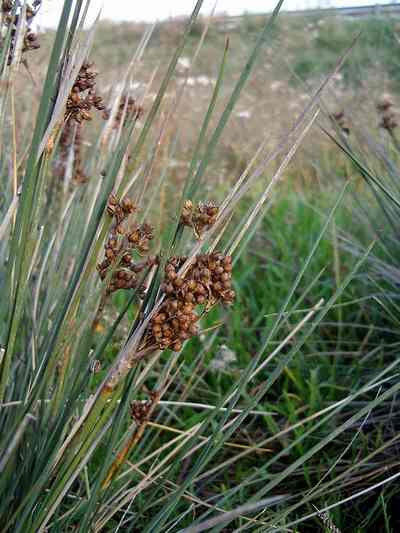
"[T]here was one particular case of a man with curative powers that seemed absolutely silly and preposterous, but his method, whatever it was, worked.... To give just one instance, the island has a growth called the sharp pointed rush [Juncus acutus].

 https://upload.wikimedia.org/wikipedia/commons/2/20/Juncus_acutus3.jpg

It grows in low wet ground either in fresh or salt water. It reaches a height of three feet and is round and green and has a very sharp point. It doesn't seem to have any use whatsoever, but Jackson, as we'll call him here, found a use for it for a man who used to vacation on the island every summer until his passing on. This well-to-do gentleman, a banker from Washington, N.C., had an unsightly wart on his nose that was more than a half inch long and still growing.

"The oddity of the rush is that the root end is white, round and soft, if you go close to the earth and pull the single rush out of its bed of roots slowly and easily, you have an all green growth except the white end. Jackson told the gentleman to pull a rush as mentioned above, and to rub the white part on his wart and place the rush back in the hole it came from and the wart would disappear before he'd realize what happened. The gentleman, Mr. Bridgeman, by name, pooh-poohed the idea but went through with the advice given him by Jackson, without telling anybody he had done so. Mr. Bridgeman was staying at the home of my uncle, Winslow Sanderson Bragg, at which as a child I was then living. Uncle Winslow was staring at Mr. Bridgeman so hard that he quizzed my uncle, "What are you staring like that at me for?" "Feel your nose, your wart is gone," said Uncle Winslow. Then Mr. Bridgeman told my uncle what Jackson had told him to do, and how skeptical he was about doing it.

"Mr. Bridgeman set out immediately to find Jackson and pay him for the favor he had done for him, but when he offered him money Jackson said "Oh my goodness, no; if I took money my gift would be gone."

As it turns out, many natural ingredients may promote the removal of warts (at least according to Readers Digest) including garlic, dandelion, birch bark, and banana peel. According to Wikipedia, juncusol, a 9,10-dihydrophrenathrene which is found in Juncus species has antimicrobial properties. The next time you are plagued with a wart, consider rubbing it with the root of the sharp pointed rush. And don't forget to place the rush back in the hole it came from!!

Our latest Ocracoke Newsletter is the story of the Ocracoke Water Tank Caper. This is the link: http://www.villagecraftsmen.com/news032117.htm.

Tuesday, April 04, 2017

Capt. Bill Gaskill's Pamlico Inn

In the past I have written about the Pamlico Inn on Ocracoke Island.  I recently discovered a January, 1932, article in MotorBoating magazine. The author writes about arriving at Ocracoke on the mailboat, and includes a description of the Pamlico Inn:

"We landed at the hotel pier and were shown a room. There probably isn’t another hotel like it in a thousand miles. Evidently starting with his little two story cottage, Capt. Bill Gaskill, by acting naturally and giving service to people who knew what they wanted has gradually expanded until he can now accommodate probably fifty guests. He specializes in sending out fishing parties, usually to the inlet with guide and bait and furnished bed, board and shelter for a fixed amount a day. Those preferring surf fishing are taken to the ocean beach on a truck. There are few formalities at Bill Gaskill’s – Bill is very apt to have a boat pulled up on the porch for repairs or painting at any time. For conventional or formal persons who cannot leave the rattle-bang of the city behind, who are unhappy without stiff white collars, and cement pavements, and who must be amused by the movies or dance halls or night clubs, the Pamlico Inn cannot be recommended. But, to those who wish to leave our so-called higher civilization behind and get out into the sunshine on clean salt water with blue sky overhead, or tramp the wide sand beaches, Bill Gaskill’s place will appeal."


Our latest Ocracoke Newsletter is the story of the Ocracoke Water Tank Caper. This is the link: http://www.villagecraftsmen.com/news032117.htm.

Monday, April 03, 2017

National Poetry Month

In honor of National Poetry Month today we are publishing an original poem about Blackbeard and Lt. Robert Maynard by frequent Ocracoke visitor Robb Foster.


Teach's Light

With blackened beard and wild claim
Did Satan, sail the Spanish main
This demon’s sword that made men swoon
That Hades spat from Bristol’s womb

Upon the sea with evil’s wrath
Did Edward sail from little Bath
What spark did light this hellish beast
That rendered sailors to their least?

As William Wire, could once attest
This wicked warrior would not rest
Hell chased him to Honduras Bay
What next, these sailors cried, dismayed?

So mortified by old nick’s wrath
And knowing not one other path
"Abandon ship!", would be their rail
To spare them from his wanton gale

Beseeching loud amongst the land
And seeking justice on the sand
Impugn this Governor Eden’s fraud!
Who reigns our Carolina flawed!

Lieutenant Maynard took the seas
To answer honest planter’s pleas
Swift with sword and sure of shot
He bade the hellion to his lot

Lt. Robert Maynard


But as his soul took to the sky
This Edward Teach gave one last cry
“You mark my words as I retire!
I’ll send you all to hellish fire!”

Those final words leapt to the air
As darkening clouds, began to flare
The wind, it danced on wicked thoughts
Then dead, the calm, his evil bought

The prudent sailors, none can blame
Will turn their backs upon the main
If northern winds can tatter sheets
Lose your desire to jam the cleats

Scoff if you must, call quaint my verse
But stronger men show lips that purse
When on the water dances bright
The far off fire of Teach’s light

Our latest Ocracoke Newsletter is the story of the Ocracoke Water Tank Caper. This is the link: http://www.villagecraftsmen.com/news032117.htm.

Saturday, April 01, 2017

Ocracoke Tram

Although I haven't mentioned it recently in this blog, I am guessing that most of our readers are aware of the NC Ferry Division's plans to establish passenger ferries from Hatteras to Ocracoke beginning in the spring of 2018. You can read more about this here and here.  

A crucial component of the plan is the addition of free tram service within Ocracoke village. However, the idea of a tram has raised numerous questions and concerns, primarily centered around logistics and traffic congestion, among island residents, . You can read more about that here and here.

The latest wrinkle in the Passenger Ferry/Tram proposal is an announcement that the trams will use the latest autonomous automobile technology. Because Ocracoke village is small, contained, and has a slow speed limit, the NC Ferry Division has partnered with Google to employ the most advanced iteration of their pioneering self-driving vehicles for the trams that will carry visitors (and residents) around the village. A Google spokesperson was quoted as saying, "This is a stellar opportunity to demonstrate the feasibility of our groundbreaking technology. The self-driving trams will provide a valuable service to Ocracoke Island, and show the world how efficient and safe autonomous vehicles can be."

Unfortunately, the recent accident involving an Uber self-driving vehicle, and Uber's decision to pull all of their autonomous cars off the streets, has concerned many Ocracoke residents. To read more about the latest developments in this plan, click here.
 
Our latest Ocracoke Newsletter is the story of the Ocracoke Water Tank Caper. This is the link: http://www.villagecraftsmen.com/news032117.htm.